

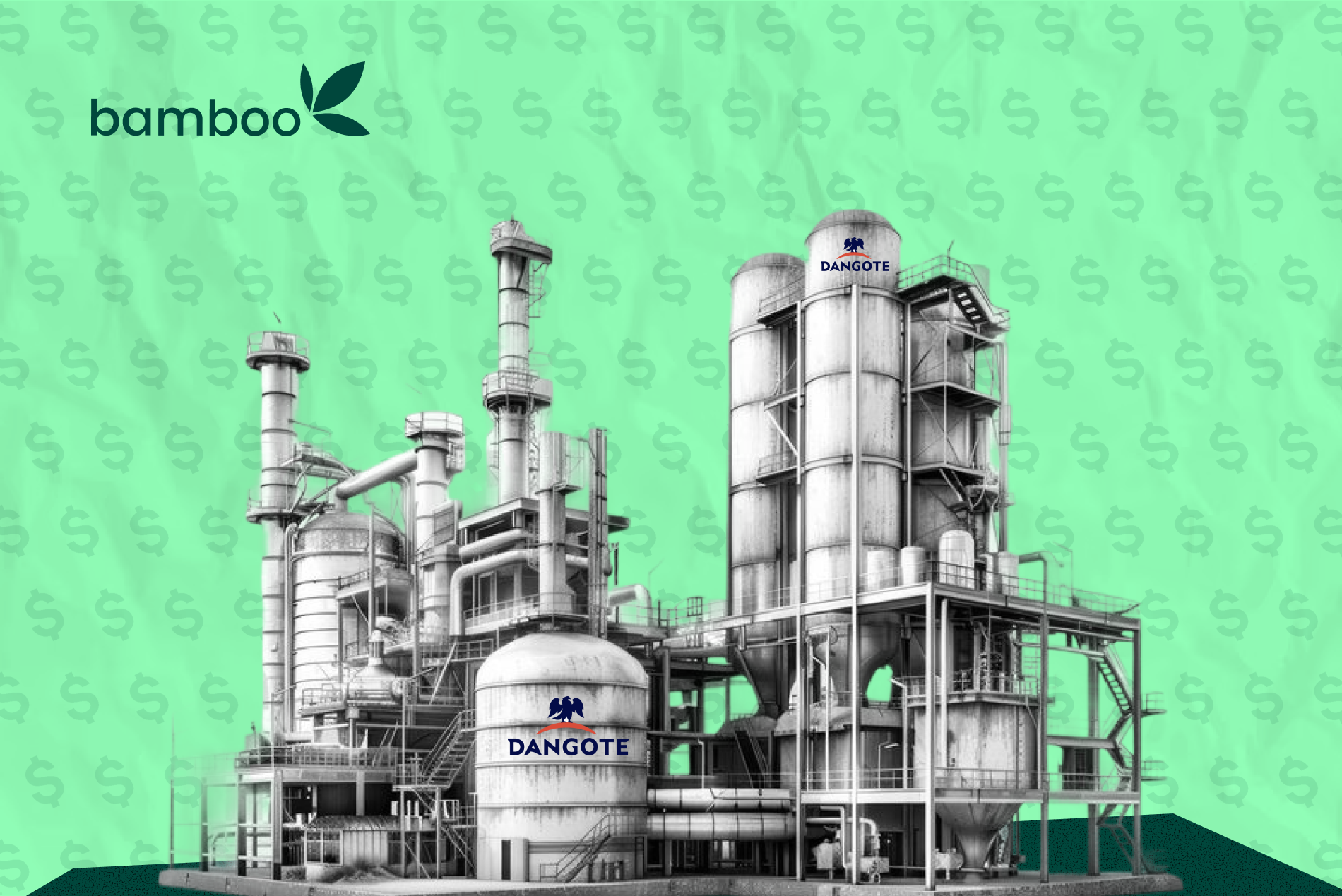
There has never been an IPO quite like this in Nigeria. Not in terms of size, not in terms of what it represents structurally, and certainly not in terms of what it means for an ordinary Nigerian investor with a phone and a funded brokerage account. The Dangote Petroleum Refinery & Petrochemicals IPO is, by almost every measure, the most consequential capital markets event in Nigeria’s history. If you have been watching the signs, you already know that the window is narrow and the preparation required starts now.
This is not a hype piece. It is an investment case, built from the numbers, the operational reality, and the structural features that set this offer apart from anything that has come before it on the NGX. The question is not whether this IPO matters. It is whether you will be positioned when the subscription window opens.
The Scale Is Not Incidental to the Case. It Is the Case.
The Dangote Refinery is the world’s largest single-train crude oil processing facility. Located in the Lekki Free Trade Zone in Lagos, it has a refining capacity of 650,000 barrels of crude oil per day and reached full commercial operations in early 2024. It processes crude into petrol, diesel, aviation fuel, and petrochemicals, and it produces up to three million metric tonnes of urea fertiliser annually, supplying markets across the continent.
That is the foundation. But the investment case is built on trajectory. Expansion plans announced in October 2025 target a doubling of refining capacity to 1.4 million barrels per day, a move that would make the Dangote Refinery not just the largest single-train facility globally, but one of the top refining sites in the world by total output. That kind of capacity expansion does not happen in a vacuum. It is being built on the back of demonstrated operational performance, secured crude supply relationships, and a government that needs this refinery to succeed.
Analysts currently value the refinery at between $40 billion and $50 billion. Earlier estimates from mid-2025 placed the figure at $20 billion to $25 billion. The upward revision reflects improved refining margins, expanded export volumes, and rising global demand for the facility’s output. For context, the entire Nigerian Exchange currently has a market capitalisation of approximately $70 billion. This single listing, even at a 5% to 10% float, would meaningfully reshape the exchange’s depth and liquidity in one transaction. That is not a rounding error. It is a structural event.
Reason One: You Get Dollar Returns While Investing in Naira
This is perhaps the single most compelling structural feature of the Dangote Refinery IPO for Nigerian retail investors, and it deserves to be stated clearly.
The Securities and Exchange Commission of Nigeria and the Nigerian Exchange Group are currently reviewing a share structure that would allow investors to purchase shares in naira while receiving dividends denominated in US dollars. The mechanism is supported by the refinery’s projected $6.4 billion in annual export revenues from petrochemicals, fuels, and fertilisers shipped to markets across Africa and beyond.
What this means in practical terms: you invest in the local currency, you own shares on the NGX, and your dividend income is linked to foreign exchange earnings. For an investor who has watched naira depreciation erode the real value of naira-denominated returns over the years, this structure is not a minor detail. It is the hedge you have been looking for without having to open a foreign currency account or invest offshore.
If the SEC approves this framework, it will set a new precedent for how Nigerian companies structure returns for domestic investors. The Dangote Refinery IPO would become the first NGX listing to offer this kind of currency optionality at scale.
If you are not yet set up to invest on the Nigerian Exchange, this is the moment to get ready. Download the Bamboo app and get your NGX account activated before the subscription window opens.
Reason Two: Nigeria Is Finally on the Right Side of Oil
Nigeria has been Africa’s largest crude oil producer for decades, yet the country spent over $10 billion annually importing refined petroleum products because domestic refining capacity was essentially non-functional. The structural absurdity of that arrangement is now being unwound.
The Dangote Refinery is already meeting between 35% and 50% of Nigeria’s domestic petrol demand. In February 2026, the refinery reduced petrol pump prices from N799 to N774 per litre, undercutting the imported fuel landing cost of N793 per litre. That is not a symbolic gesture. That is a refinery with enough operational capacity and pricing power to set the benchmark for fuel costs across the country.
As the refinery scales toward 1.4 million barrels per day, Nigeria transitions from a net importer of refined petroleum to a net exporter. The International Monetary Fund projects that the refinery could lift Nigeria’s non-oil GDP by 1.5% and boost annual foreign exchange earnings by $5.5 billion. Those are macroeconomic tailwinds that flow directly into the value of the asset you would be buying a stake in.
When you invest in this IPO, you are not simply buying equity in a refinery. You are buying a position in Nigeria’s structural shift from fuel-import dependency to domestic refining dominance and export capability. That is a long-term thesis with government, institutional, and macroeconomic alignment behind it.
Reason Three: This Is the Largest IPO in African Capital Markets History
The Dangote Refinery IPO is targeting a raise of up to $5 billion through a 5% to 10% equity float. No African stock exchange has hosted an equity offering of this size. The listing would dwarf every previous major NGX offering and would likely be referenced as a benchmark event for African capital markets for years.
Why does the size matter to you as an investor? Because of what comes with it.
When an offering of this scale lists, it attracts international institutional money that would otherwise not flow into the NGX. It brings analyst coverage from global research houses. It boosts exchange liquidity, tightens bid-ask spreads across the board, and signals to foreign portfolio managers that the NGX is a serious market worth allocating to. All of that activity creates a rising tide that lifts other Nigerian equities alongside the refinery stock itself.
The Dangote Group has appointed a credible consortium to manage the transaction: Stanbic IBTC Capital for international placements, Vetiva Capital Management for Nigerian retail distribution, and FirstCap for institutional investors including pension funds. This is not a hastily assembled team. It is an advisory structure designed to bring in both domestic and foreign capital simultaneously, which supports pricing discipline and post-listing stability.
Dangote has also expressed ambitions for secondary listings on other African stock exchanges and has held discussions with exchange heads from Johannesburg, Nairobi, Accra, Abidjan, and Addis Ababa about the IPO serving as a blueprint for pan-African cross-border capital raising. A potential dual listing in London remains under consideration. The implication for pricing is clear: more global investor demand competing for the same float typically supports a stronger valuation at offer.
Reason Four: The Business Has Already Proven Itself
IPOs in Nigeria have sometimes asked investors to take a bet on a company whose operations were still proving themselves. The Dangote Refinery is not that. This is a fully commissioned, operating facility that has already navigated the hardest part of any infrastructure project: actually getting to production.
The Dangote Group’s financials reflect the transformation this refinery has driven. Group revenues have grown from $3.3 billion to $18 billion over the past five years, while EBITDA rose from $1.8 billion to $2.8 billion over the same period. The refinery has already expanded its export footprint across Africa, shipping multiple cargoes of petrol to regional markets within single months. Petrochemical exports, including polypropylene and fertilisers, are supporting industrial value chains from Nigeria to East Africa.
NNPC holds a 7.25% equity stake in the refinery, a position that Dangote himself described as larger than Elon Musk’s equity stake in Tesla. That level of government-linked institutional ownership does not eliminate risk, but it does align the Nigerian state’s interests with the refinery’s continued operational success, crude supply security, and pricing stability.
For investors who want to understand the full operational picture before the prospectus drops, the Learn With Bamboo breakdown of the Dangote Refinery IPO is worth reading carefully.
The Timeline: What Is Happening and When
Here is where things stand as of April 2026:
The Dangote Group is expected to submit its IPO prospectus to the SEC this month, followed by a nationwide investor roadshow and the opening of the subscription window in May 2026. Listing on the NGX main board is targeted for June or July 2026.
The subscription window for a high-profile IPO of this size will move quickly. Institutional allocations from pension funds and international investors will absorb a significant portion of the float before retail investors even begin. That is not a speculation; it is how large IPOs are structured globally. The retail window will be competitive, and late applications frequently receive reduced allocations or none at all.
Being prepared means having a funded account with a licensed investment platform before the subscription opens, not after. If you are already on Bamboo, check that your account is fully activated and funded. If you are not yet on Bamboo, download the app now and complete the setup process. Nigerian retail investors will be able to participate through the NGX primary offer directly from the platform.
What You Need to Know About the Risks
No credible investment case ignores risk. Here are the ones that matter for this IPO.
Debt: The refinery carries $3.65 billion in debt, with plans for repayment through operations and asset sales. If refining margins compress or crude supply is disrupted, debt servicing could reduce the cash available for dividends. Investors should monitor the debt structure when the prospectus is published.
Valuation uncertainty: The range between analyst estimates ($40 billion to $50 billion) and where the IPO is ultimately priced remains wide. Pricing is determined at the end of the roadshow based on investor demand. Buying into a listing at an inflated opening-day price, if early enthusiasm drives a spike, carries its own downside.
IPO volatility: Large, high-profile listings tend to be volatile in the first weeks of trading. Patient investors who hold through the noise tend to fare better than those trading on opening-day sentiment. This is a long-duration asset. Infrastructure plays are measured in years, not quarters.
Currency and macro: While the dollar dividend structure is designed to mitigate naira exposure, macroeconomic turbulence in Nigeria, including changes to fuel subsidy policy, crude supply disruptions, or broader FX instability, can affect the underlying business performance.
Eyes open. These risks are real. They are also the kind of risks that come with any major infrastructure investment in an emerging market, and they are manageable with a long-term investment horizon and a position sized appropriately for your portfolio.
How to Participate
When the subscription window opens, your route in is through a licensed investment platform with access to NGX primary market offers.
Bamboo is positioned to give Nigerian retail investors direct access to the subscription process from their phones. No queuing at a broker’s office, no paperwork chase, no missed windows. You apply, fund your application, and receive your allocation through the same platform you already use to invest in Nigerian and US stocks.
The Bamboo app is SEC-regulated, NGX-connected, and built for exactly this kind of moment. If you want to be in the room when Nigeria’s most significant IPO in history opens to the public, get the app here and make sure your account is ready.
The Bigger Picture
Aliko Dangote has said publicly that he wants the Dangote Refinery to be “the golden stock of the exchange.” That language reflects more than ambition. It reflects the position the refinery already occupies in Nigeria’s economic architecture and the role the IPO is designed to play in anchoring the NGX’s identity as a serious African exchange.
For Nigerian retail investors, this is not just another listing. It is an invitation to own a piece of the infrastructure that is reshaping energy supply across an entire continent, with dollar-linked returns, government alignment, and the macroeconomic tailwinds of a country finally refining its own crude oil at scale.
The window is opening. The only question worth asking now is whether you will be ready when it does.
Disclaimer: This article is for informational purposes only and does not constitute investment advice. All investments carry risk. Please conduct your own research and consult a financial adviser before making investment decisions.