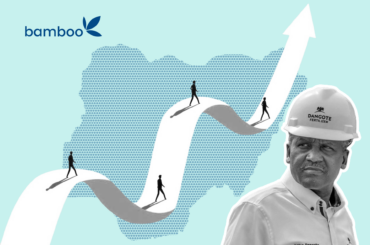


When Aliko Dangote stood in front of journalists at the Lekki refinery complex in February 2026, flanked by NNPC Group CEO Bayo Ojulari, the headline announcement was about soap. Or rather, the chemical that makes soap work.
Dangote revealed plans to construct a Linear Alkyl Benzene plant inside the refinery complex, with a production capacity of 400,000 tonnes per year. LAB is the primary feedstock for surfactants, the active ingredients in household detergents, industrial cleaners, and personal care products. The plant will not make finished detergent. It will make the raw material that every detergent manufacturer on the continent currently imports.
For retail investors tracking the anticipated Dangote Refinery IPO, this announcement is worth studying carefully. Not because detergent is an exciting sector, but because it tells you something important about the kind of business this is becoming.
What Is Linear Alkyl Benzene and Why Does It Matter?
LAB is a refined petrochemical compound used to produce surfactants, which are the cleaning agents responsible for the foaming action in washing powder, dish soap, and liquid detergents. It sits near the top of the detergent manufacturing value chain: without LAB, you cannot make surfactant; without surfactant, you cannot make detergent.
The process works like this: crude oil is refined into kerosene fractions and benzene, which are then chemically combined to produce LAB. That LAB is sold to manufacturers, who process it into Linear Alkyl Benzene Sulfonic Acid (LABSA), which is then formulated into consumer products. Dangote Refinery’s position at the crude processing stage means it can produce LAB at a structural cost advantage over standalone chemical plants.
Currently, Africa has exactly two LAB production facilities. Algeria’s Sonatrach operates a 100,000-tonne-per-year plant in Skikda. Egypt has a facility producing roughly 100,000 tonnes per year. Combined, the entire continent produces approximately 200,000 tonnes annually. The proposed Dangote plant will produce 400,000 tonnes annually on its own. At full capacity, it will more than double Africa’s entire current LAB output from a single site in Lagos.
Every tonne of LAB consumed by detergent manufacturers in West Africa today is imported, primarily from Asia, the Middle East, and Europe. Nigeria alone imported $43.8 million worth of LAB in the first quarter of 2025, a figure that represented a 5,728% increase from the previous quarter, reflecting surging demand from local manufacturers as the naira depreciation made import substitution an operational priority.
The Market These Numbers Are Pointing At
Africa’s detergent chemicals market is large, growing, and structurally undersupplied. Current market size sits at approximately $58.9 billion as of 2025. Industry analysts project it will reach $85.6 billion by 2031, a compound annual growth rate of 6.4%.
The drivers behind that growth are not complicated. Urbanisation across sub-Saharan Africa is expanding the formal retail and consumer goods sector. Rising incomes are shifting household spending toward packaged cleaning products. Hygiene awareness, accelerated by the COVID period, has remained structurally elevated. And population growth across West and Central Africa means the addressable consumer base simply keeps expanding.
Nigeria’s population of over 220 million is, by itself, one of the largest detergent markets in the developing world. When you extend that to the broader West African region, including Ghana, Côte d’Ivoire, Senegal, and beyond, the scale of latent demand that currently relies on imported inputs becomes significant.
Dangote’s position as the upstream supplier to this market, rather than a consumer goods competitor, is deliberate and strategically sound. The refinery is not trying to dislodge Unilever or PZ Cussons from supermarket shelves. It is positioning itself as the raw material supplier those manufacturers must buy from, capturing value earlier in the chain and insulating itself from the brand competition that defines the consumer goods space.
How This Connects to the IPO Thesis
Ahead of the anticipated Dangote Refinery IPO on the Nigerian Exchange, much of the public conversation has focused on fuel. Specifically: can the refinery consistently supply petrol, diesel, and aviation fuel to the Nigerian market at competitive prices, reducing the country’s dependency on imported refined products?
That is a legitimate question and the refinery’s progress on that front has been real. At 650,000 barrels per day nameplate capacity, it is already the largest single-train refinery on the continent. The naira-for-crude arrangement with the Nigerian government has improved crude supply stability. Petrol produced at Lekki has traded at prices that undercut importers in certain periods.
But the fuel thesis alone, while credible, has a ceiling. Refined petroleum margins are volatile, crude prices fluctuate, and Nigeria’s downstream fuel sector is subject to political intervention on pricing. An investor who buys into the Dangote Refinery IPO purely as a fuel play is accepting significant commodity and regulatory exposure.
The LAB plant, and the broader petrochemical expansion it represents, changes the nature of that risk profile in a meaningful way.
Petrochemical feedstocks like LAB are sold on commercial terms to industrial buyers, not at government-regulated pump prices. The customers are manufacturers, not retail consumers, and the contracts tend to be longer-dated and more predictable. The business model is closer to specialty chemicals than it is to fuel retail, and the margin structure reflects that.
When Dangote announced in October 2025 that the refinery would expand from 650,000 barrels per day to 1.4 million barrels per day, he also disclosed that polypropylene production would increase from 900,000 metric tonnes to 2.4 million metric tonnes per annum, alongside the LAB plant and base oil production for lubricants. Taken together, these announcements describe a company building a diversified petrochemical revenue base sitting on top of a fuel refining operation.
That is a fundamentally different investment case from a standalone refinery.
The Import Substitution Angle Is Not Just a Political Talking Point
Import substitution has been a recurring theme in Nigerian industrial policy for decades, with results that have been mixed at best. It is worth being specific about why the Dangote LAB plant is different from most import substitution projects.
First, the feedstock is captive. The refinery already processes crude oil and produces the intermediate streams, specifically kerosene fractions and benzene, that serve as inputs to LAB production. It is not dependent on imported raw materials to make the product. The supply chain advantage is built in at the architectural level.
Second, the demand is already there and already paying in hard currency. Nigeria’s $43.8 million LAB import bill in a single quarter of 2025 is not speculative demand; it is documented, revealed preference by manufacturers who need this material and are currently acquiring it from overseas. When local supply becomes available at competitive prices, these buyers do not need to be educated or incentivised. They simply switch.
Third, the scale creates its own logic. At 400,000 tonnes per year, the plant is not a niche operation serving Nigerian demand alone. It is sized to supply the entire African continent. That means Dangote Refinery enters the market as a regional supplier, not a domestic one, with a cost and logistics advantage over Asian and Middle Eastern producers who are shipping across long distances.
David Bird, the refinery’s CEO, put it plainly: “As we speak, 100 percent of the detergents used in West Africa are imported. We will be building an LAB plant in order to make the surfactant.”
That framing is not promotional language. It is a market structure observation. When you are entering a market where 100% of the product is imported, you are not disrupting incumbents. You are building the domestic industry from scratch.
What the “Industrial Hub” Strategy Means for Valuation
Dangote’s own language around the refinery has shifted noticeably over the past twelve months. He no longer describes it primarily as a refinery. He describes it as an industrial hub.
“This is not just a refinery,” he said during the February 2026 complex tour. “Here is an industrial hub.”
That shift in framing reflects a deliberate repositioning of the investment thesis. A refinery is valued primarily on throughput, utilisation rate, and the crack spread between crude input and refined product output. An industrial hub, with multiple product lines serving different end markets, attracts a different valuation methodology entirely.
Integrated petrochemical complexes are typically valued on earnings before interest, taxes, depreciation, and amortisation multiples that reflect the diversification premium across product lines and the strategic value of captive feedstock. Companies like Saudi Aramco, Reliance Industries in India, and Sasol in South Africa trade at premiums precisely because their integrated structure reduces margin volatility and creates multiple vectors for revenue growth.
The LAB plant, the polypropylene expansion, and the base oil production represent Dangote Refinery building exactly that kind of integrated structure. Each product line adds revenue that is structurally independent from the fuel margin cycle.
For investors evaluating the IPO prospectus when it becomes available, the key questions will not only be about current fuel output or refinery utilisation. They will include: what is the projected revenue contribution from petrochemicals at steady state? What are the LAB offtake arrangements? How much of the polypropylene capacity is already contracted? These numbers will shape the earnings multiple the market assigns to the business.
What Investors Should Be Doing Now
The Dangote Refinery IPO is one of the most consequential listings in the history of the Nigerian Exchange. The size of the offering, the profile of the company, and the strategic importance of the business to Nigeria’s industrial economy mean that retail investor interest will be significant.
Preparing for an IPO of this scale is not simply a matter of having cash ready. It requires understanding the business, reading the prospectus carefully when it is published, and having a clear view of the valuation framework you intend to apply.
The LAB plant announcement is useful preparation material because it illustrates the complexity of the investment case. This is not a one-line business. It is a multi-product industrial platform with different risk and return characteristics across its business segments. An investor who only understands the fuel story will not be positioned to evaluate the full picture.
The 30-month construction timeline on the LAB plant means the facility will still be under construction at IPO. Investors will be pricing in future revenue, not current output. That means the quality of management’s execution track record, and their credibility on delivery timelines, becomes a key input to the valuation conversation.
Dangote’s record on the refinery itself is instructive. The original project faced years of delays before reaching commercial operations. The ramp-up to consistent throughput was slower than initial projections. That history does not disqualify the LAB plant thesis, but it does mean investors should apply a realistic timeline to their projections rather than anchoring to management guidance.
The Bottom Line
The Dangote Refinery LAB plant is not a soft announcement. It is a concrete, capital-intensive project targeting a documented gap in Africa’s industrial supply chain, backed by a refinery that already has the feedstock to produce it.
For investors preparing for the Dangote Refinery IPO, the detergent chemical expansion is one of several signals pointing toward a business model that extends well beyond fuel. Understanding that full picture, across fuel, polypropylene, LAB, and base oil, is what separates an informed investment decision from a speculative one.
The refinery that started as a solution to Nigeria’s petrol import problem is in the process of becoming something considerably larger. Whether the IPO price reflects that ambition fairly is a question you can only answer if you understand what the business is actually building.
That work starts now.
Bamboo gives Nigerian retail investors access to local and international markets. To stay informed as the Dangote Refinery IPO approaches, create your Bamboo account and set up your NGX watchlist today.