

Nigeria’s stock market has a history of long stretches of relative quiet in the primary market, punctuated by moments that genuinely change the character of the exchange. 2026 is shaping up to be one of those moments.
The Dangote Petroleum Refinery IPO, if it lists on schedule between June and July, will be the largest public share sale in Nigerian history by a considerable distance. It will also be, structurally, unlike anything the NGX has seen before. Alongside it, a regulatory-driven wave of insurance sector rights issues is running simultaneously, and Oando Plc is waiting on multi-jurisdictional approvals for a N220 billion capital raise. The primary market calendar is full.
This is not a normal year. Here is what investors need to understand about each deal.
The Dangote Refinery IPO: Why This One Is Different
The numbers are large enough that they are easy to dismiss as abstraction. They are not. Economists project that listing the Dangote Petroleum Refinery and Petrochemicals on the NGX could push Nigeria’s total stock market capitalisation past the equivalent of $140 billion. The exchange currently sits at around N131 trillion. That is not incremental growth. That is a structural transformation of the market.
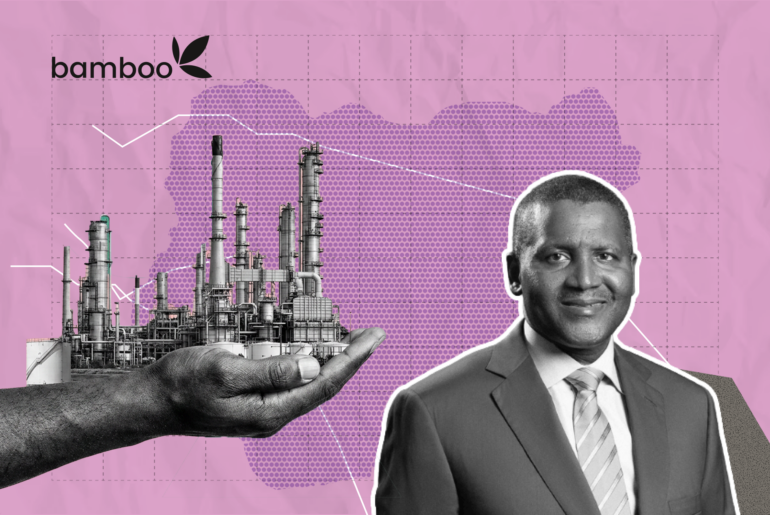
The refinery itself needs little introduction. Built at a cost of $20 billion in the Ibeju Lekki Free Zone, it is the world’s largest single-train crude oil processing facility, running at 650,000 barrels per day. It produces petrol, diesel, aviation fuel, and petrochemicals. It has already moved fuel prices in Nigeria. When the refinery cut its petrol price from N799 to N774 per litre in February 2026, undercutting imported fuel landing costs, that was not a gesture. It was the refinery doing what it was built to do.
The IPO is expected to offer between 5% and 10% of the company’s equity, raising up to $5 billion. Analysts are valuing the refinery at between $40 billion and $50 billion. To put that in context: the $20 billion construction cost already represented the largest private investment in African history. The market is now pricing the operating business at more than twice what it cost to build. That gap between construction cost and enterprise value is where the real investment thesis lives.
The Dollar Dividend Structure Changes the Conversation
The most consequential detail in the Dangote Refinery IPO is not the size. It is the dividend structure. Dangote has confirmed that investors will buy shares in naira but will have the option to receive dividends in US dollars, drawn from the refinery’s projected $6.4 billion in annual export revenues from petrochemicals and fuel products. The SEC is currently reviewing the framework.
If approved, this would be a structural first for the NGX. Nigerian investors have historically faced a binary choice: own naira-denominated assets and absorb currency risk, or go offshore entirely. A listed naira equity that pays dollar dividends would occupy entirely new territory. It would also change how foreign portfolio investors think about the exchange, because the currency risk that has kept many of them on the sidelines would be materially reduced for this specific stock.
Dangote put it plainly: “You buy in naira, but you get dividends in dollars.” That sentence, if it becomes reality, is one of the more significant things said about the Nigerian capital market in years.
The Pan-African Dimension
The NGX Group convened chief executives from five African stock exchanges in Lagos on April 1, 2026: the Johannesburg Stock Exchange, the Ghana Stock Exchange, the Nairobi Securities Exchange, the Ethiopian Securities Exchange, and the Bourse Regionale des Valeurs Mobilieres, which covers eight West African countries. The agenda was the Dangote Refinery IPO.
The discussions centred on cross-border settlement frameworks and multi-jurisdictional listing pathways that would let investors subscribe from any of these markets. The Dangote Group has positioned this as a pan-African IPO, not a purely domestic transaction. Stanbic IBTC Capital will handle international placements and institutional investor relations, Vetiva Advisory Services will manage Nigerian retail distribution, and FirstCap will coordinate pension fund allocations.
A prospectus submission to the SEC is expected in April. A nationwide investor roadshow and the launch of an electronic subscription platform are planned for May. The formal listing targets June to July 2026.
What to Watch Before You Subscribe
The prospectus is the document that matters. When it is filed with the SEC in April, investors should look closely at three things: the audited financials and refinery utilisation rates, the exact structure of the dollar dividend mechanism and its conditionality, and the risk disclosures around crude oil supply agreements and refinery margin sensitivity to global oil prices.
Early IPO trading is often noisy. Speculative activity in the first weeks can push prices above or below fair value. For long-term investors, the question worth sitting with is whether the refinery’s operational performance over the first two to three quarters after listing matches the projections in the prospectus. If it does, the dividend yield case becomes very strong.
The Insurance Sector Rights Issues: A Regulatory Story, Not Just a Market One
To understand why multiple insurance companies are simultaneously in the market raising capital, you need one piece of context: the Nigerian Insurance Industry Reform Act, signed into law in 2025, introduced new minimum paid-up capital requirements across all insurance categories. Companies that do not meet the new thresholds face regulatory sanctions. This is a compliance-driven wave of capital raising, not a sudden surge of investor enthusiasm for the sector.
That distinction matters for how you evaluate these offers. Rights issues driven by regulatory minimums tend to be less about growth ambition and more about survival. That does not make them bad investments, but it does mean the investment case rests on how each company uses the fresh capital once it clears the regulatory bar.
SUNU Assurances Nigeria
SUNU Assurances opened a N2.08 billion rights issue on April 13, 2026, following SEC approval. The offer involves 2,075,285,714 ordinary shares of 50 kobo each at N4.50 per share, on the basis of five new shares for every fourteen shares held as at February 12, 2026. The acceptance list closes on May 20, 2026. Rights are tradable on the NGX floor during the offer period through the issuing house, NSL Capital Partners Limited.
Guinea Insurance
Guinea Insurance secured SEC approval for a N5.8 billion rights issue in March 2026. The offer comprises 5,295,200,000 ordinary shares at N1.10 per share, on the basis of two new shares for every three held as at January 21, 2026. It opened on March 25 and closes on May 1, 2026. The company has been explicit that the raise is designed to meet the NIIRA minimum capital standard and to expand underwriting capacity.
Linkage Assurance
Linkage Assurance opened a N16.3 billion rights issue on March 11, 2026. The offer involves 12,320,000,000 ordinary shares at N1.32 per share, on the basis of two new ordinary shares for every three shares held as at January 22, 2026. The offer closes on April 23, 2026. The capital is earmarked for regulatory compliance and sector expansion.
For investors who do not already hold shares in these companies, the secondary market trading of rights during the offer period represents a lower-friction entry point. Rights trade at a discount to the intrinsic value of the underlying offer, which can create a short-term arbitrage window for investors paying close attention.
Oando’s N220 Billion Rights Issue: Waiting on the Green Light
Oando Plc submitted its application to the NGX in February 2026 to list a rights issue comprising 4,415,867,342 ordinary shares of 50 kobo each at N50 per share, on a one-for-two basis. At full subscription, this would raise approximately N220.8 billion, making it one of the largest rights issues in Nigerian market history.
The complication is that Oando is dual-listed. Before the offer can proceed, it needs clearance from the SEC Nigeria, the Johannesburg Stock Exchange, and the Reserve Bank of South Africa. Until those approvals land, the opening and closing dates remain unannounced.
Oando’s shareholders approved a broader plan at the company’s 46th Annual General Meeting to raise up to N500 billion through various capital market instruments, of which this rights issue is the first tranche. The company has not disclosed the specific use of proceeds, with further details to be communicated through the formal offer documents once regulatory approvals are received.
The Bigger Picture for Nigerian Investors
The primary market activity in 2026 reflects something real about the direction of the Nigerian capital market. The NGX is no longer just a place where banks and consumer goods companies list and trade. A $20 billion energy asset, with dollar-denominated export revenues and a potential cross-border African shareholder base, changes the profile of the exchange in a meaningful way.
The insurance recapitalisation wave will run its course over the next twelve to eighteen months as companies either raise the required capital or face consolidation. That consolidation, when it comes, will likely produce stronger underwriters and a more functional insurance sector, which ultimately benefits policyholders and investors alike.
The opportunity in front of Nigerian investors in 2026 is specific and time-bound. The Dangote Refinery IPO will not wait. The insurance rights issues have hard closing dates. Capital markets reward preparation.
Read the offer documents. Understand what you are buying. And move with enough time to think clearly.
This article is for informational purposes only and does not constitute investment advice. Consult a licensed financial adviser before making investment decisions.