


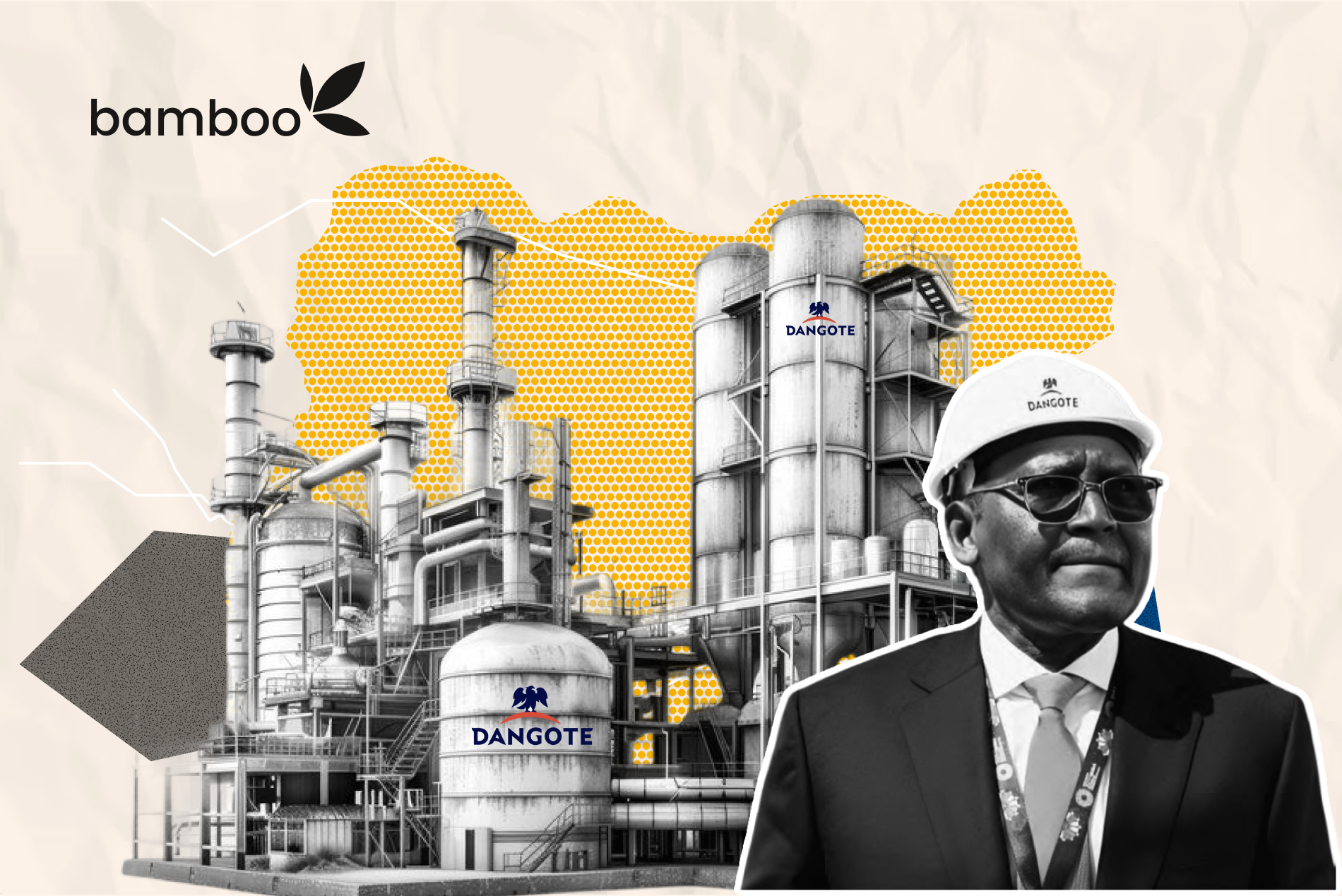
The most anticipated stock market listing in Nigerian history is taking shape. Dangote Petroleum Refinery and Petrochemicals, the 650,000-barrel-per-day facility sitting inside the Lekki Free Zone in Lagos, is on course for an Initial Public Offering on the Nigerian Exchange in 2026. The prospectus is expected to be filed with the Securities and Exchange Commission in April. A nationwide investor roadshow is planned for May. A formal listing on the NGX is targeted between June and July.
On paper, current reports point to the Main Board as the landing spot. But a credible question sits underneath that plan: does a company of this size and strategic weight belong on the Main Board at all, or should it be debuting on the NGX Premium Board, the exchange’s highest-tier listing segment?
This is not a hypothetical for its own sake. Where a company sits on the NGX has real implications for how institutional investors engage with it, how it is weighted in indices, and what signals it sends to the market about governance and accountability. For investors deciding whether and how to participate in this IPO, understanding the board structure is part of understanding the stock.
What Is the NGX Premium Board?
The NGX operates a three-tier market segmentation structure. At the top sits the Premium Board, designed for large-cap, blue-chip companies that meet elevated standards across capitalisation, governance, liquidity, and financial disclosure. Below it is the Main Board, which accommodates the majority of listed companies. The Growth Board serves smaller or early-stage issuers.
Premium Board listing requirements go beyond what the Main Board demands in several important areas:
Market capitalisation. Companies must meet a substantially higher minimum market cap threshold than Main Board issuers. The NGX designed the Premium Board to house Nigeria’s largest and most established companies, not emerging ones.
Free float. A higher proportion of shares must be in public hands and available for trading. This requirement exists to ensure meaningful liquidity rather than thin, easily manipulated trading volumes.
Corporate governance. Board composition standards are stricter. Requirements around independent directors, audit committee structures, and the frequency and quality of financial reporting are all more demanding than on the Main Board.
Financial track record. Companies are generally expected to demonstrate sustained profitability or revenue over a defined period, not just project future earnings.
Companies currently on or associated with the Premium Board tier include Dangote Cement, MTN Nigeria, Airtel Africa, and Seplat Energy: the names that most institutional investors in Nigeria treat as benchmark holdings.
The Case for a Premium Board Debut
When you place the Dangote Refinery against these criteria, the case for Premium Board listing is almost self-evident.
On market capitalisation, it is in a category of its own. Analysts currently value the refinery at between $40 billion and $50 billion, which would push the total market capitalisation of the NGX past $140 billion at the time of listing. To put that in context, the entire NGX market capitalisation currently sits at around $70 billion. A single listing that nearly doubles the size of the exchange is not a Main Board company in any meaningful sense of the phrase.
On financial scale, it is already generating serious revenue. The refinery’s projected annual export revenue from petrochemicals and fuel products is $6.4 billion. That figure is not a forecast built on optimism: it is grounded in operational reality. The facility already exports diesel, aviation fuel, and gasoline at scale, and has been supplying jet fuel to European markets. Wood Mackenzie analyst Alan Gelder has noted the refinery’s strong profitability outlook, pointing to rising export volumes and sustained demand across product segments.
On governance, the listing structure already demands it. The novel dividend structure being introduced for this offering — investors subscribe in naira but have the option to receive dividends in US dollars — is being reviewed by both the SEC and the NGX precisely because it introduces a new accountability framework to the Nigerian market. A company operating under that level of regulatory scrutiny, with foreign investor participation built into its mandate, is already being held to a higher standard than a typical Main Board issuer.
On strategic importance, it is already functioning as a national asset. NNPC holds a 7.25% equity stake in the refinery on behalf of Nigerians. Dangote has described his ambition clearly: “We want the Dangote Refinery to be the golden stock of the Exchange.” A company positioned as the anchor of the Nigerian Exchange’s identity and global reputation is a Premium Board company, whether or not it is formally placed there at launch.
Why the Main Board Was Likely Chosen Instead
If the Premium Board case is this strong, why is the listing targeting the Main Board?
The honest answer is structural flexibility. This IPO is unlike any transaction the NGX has processed before, and novelty creates regulatory friction. The naira-subscription, dollar-dividend mechanism is still under active review by both the SEC and the NGX. Working through that process on the Main Board, where the rules are better established for unconventional structures, is likely simpler than doing so while simultaneously meeting the Premium Board’s more exacting listing conditions.
There is also the float question. The offering covers between 5% and 10% of the refinery’s capital. That is a narrow public stake for a company with ambitions to anchor a continent-wide exchange ecosystem. Premium Board free float requirements could create tension with Dangote’s stated intention to retain 65–70% control. The Main Board gives the company room to list, establish a trading record, and then potentially migrate upward once the float expands and the regulatory framework for the dollar-dividend structure is fully codified.
The cross-border dimension adds another layer of complexity. NGX Group recently convened the chief executives of five major African stock exchanges — the Johannesburg Stock Exchange, the Ghana Stock Exchange, the Nairobi Securities Exchange, the Ethiopian Securities Exchange, and the BRVM — in Lagos on 1 April 2026 to discuss cross-border listing frameworks for the refinery offering. Participants raised concerns about whether the available float would be sufficient to accommodate meaningful allocations across multiple exchanges simultaneously. A Main Board listing, with its more flexible structural requirements, may simply be the more workable foundation for a transaction that is trying to accomplish several unprecedented things at once.
What a Premium Board Debut Would Have Meant for the Market
Had the refinery launched directly onto the Premium Board, the market effects would have been immediate and significant.
Index reweighting. Premium Board companies carry greater weight in NGX indices. A refinery listing at a $40–50 billion valuation would have immediately altered sector weightings on the exchange, pulling energy up and repositioning the financial sector’s dominance in NGX indices. This would have triggered forced rebalancing from passive funds tracking those indices, generating large automatic buy orders at launch.
Foreign institutional eligibility. Many foreign portfolio investors have mandates that restrict them to companies listed on the Premium or equivalent tier of their exchange. A Premium Board debut would have immediately broadened the universe of eligible foreign buyers, likely driving up demand and potentially the offer price.
Governance signalling at scale. BusinessDay noted that the Dangote listing, if implemented, would be “the landmark transaction of the year” and could significantly increase total NGX market capitalisation. A Premium Board debut would have sent the clearest possible signal that the Nigerian market is operating at an international governance standard, not just in aspiration but in practice.
Retail investor confidence. Nigerian retail investors have been burned before by listings that overpromised and underdelivered on transparency. The Premium Board’s stricter disclosure requirements would have offered an additional layer of protection, beyond the standard IPO prospectus, for the millions of ordinary Nigerians expected to participate in this offering.
The Migration Pathway: Main Board Now, Premium Board Later
The more likely scenario, based on how exchanges typically handle landmark listings of this kind, is a post-listing migration. The refinery lists on the Main Board, establishes a trading history, demonstrates compliance with reporting obligations in the novel dollar-dividend structure, and then applies for Premium Board status once the regulatory framework is fully settled and the free float has potentially expanded.
This is not without precedent. Companies list on the tier that works for their immediate structure and move up as their profile grows. The NGX itself has an interest in seeing this happen: having the most valuable company on the exchange sit on the Main Board indefinitely would dilute the prestige of the Premium Board tier and raise questions about what the tier is actually for.
For investors, the practical takeaway is this: the board tier at launch is less important than the underlying fundamentals of the business. The refinery carries $3.65 billion in debt, which Dangote Group plans to repay through operational cash flows and asset transactions. The offer structure means you are buying into a company that earns in dollars and has projected annual export revenue of $6.4 billion from a facility with no comparable domestic competitor. Whether that stock is formally on the Main Board or the Premium Board at day one, the investment thesis is the same.
Frequently Asked Questions
What is the NGX Premium Board? The NGX Premium Board is the highest listing tier on the Nigerian Exchange, reserved for large-cap companies that meet elevated standards in market capitalisation, corporate governance, free float, and financial disclosure. Companies on this tier include Dangote Cement, MTN Nigeria, and Seplat Energy.
Will the Dangote Refinery list on the Premium Board? Current reports indicate the listing is targeting the NGX Main Board, with a formal listing expected between June and July 2026. However, given the refinery’s valuation and scale, a future migration to the Premium Board is a credible outcome once the listing structure is fully established and the free float potentially expands.
Why does board tier matter to investors? Board tier affects index inclusion and weighting, eligibility for certain foreign institutional investors, and the level of governance and disclosure requirements a company must meet. Premium Board companies face stricter scrutiny, which reduces certain informational risks for investors.
What makes the Dangote Refinery IPO different from a typical NGX listing? Several things set it apart: the scale of the valuation, the novel naira-subscription and dollar-dividend structure, the involvement of five African exchanges in cross-border listing discussions, and the strategic significance of the asset as Africa’s largest refinery.
How can I buy shares in the Dangote Refinery IPO? You will need a funded investment account and a CSCS (Central Securities Clearing System) account. Read our full guide to the Dangote Refinery IPO here, including how to set up an account and what to look for in the prospectus before you apply.
The Bottom Line
The Dangote Refinery IPO is heading for the Main Board, and there are legitimate structural reasons for that choice. But the Premium Board question is not going away. A company of this size, with this level of foreign investor interest, this novel dividend structure, and this explicit ambition to be the defining stock of the Nigerian Exchange, is a Premium Board company in every sense that matters.
Whether it arrives there at launch or migrates there in the months following its debut, the refinery’s listing will reshape the NGX in ways that go beyond board tiers. For Nigerian investors, the immediate priority is simpler: understand the offer structure, read the prospectus when it drops, and make sure your account is funded and your CSCS details are in order before the subscription window opens.
This is a once-in-a-generation listing. The board tier it launches on is a footnote compared to what the company itself represents.